Hanoi launches Global Coffee Alliance to build a sustainable ecosystem and elevate Vietnam’s global standing
Thứ sáu, 27/03/2026 - 13:21 (GMT+7)
V.U.M - The International Coffee Conference 2026 in Hanoi marked not only the debut of the Global Coffee Alliance but also a shift in approach, where diplomacy, economics and culture converge to shape the future of the coffee industry amid global volatility.
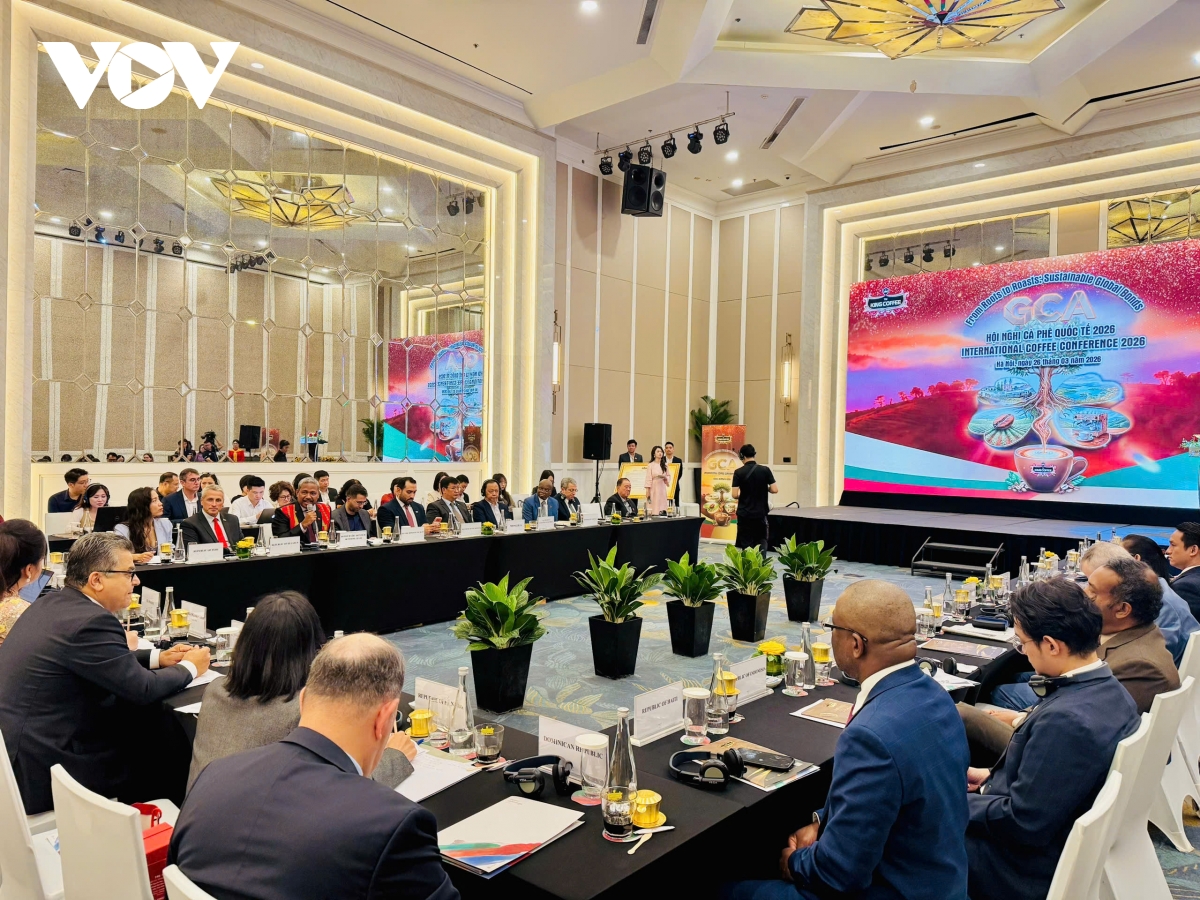
The International Coffee Conference 2026 was held on March 26 in Hanoi, with the participation of diplomatic delegations. (Photo: VOV)
Held on March 26, 2026 in Hanoi, the International Coffee Conference 2026 brought together 19 diplomatic delegations alongside representatives from government agencies, international organizations, businesses and leading experts. More than a conventional forum for dialogue or trade promotion, the event stood out as a milestone with the official unveiling of the Global Coffee Alliance, laying the groundwork for a new multilateral cooperation framework in the global coffee sector.
As the global coffee industry faces mounting challenges ranging from climate change and supply chain disruptions to increasing demands for transparency and sustainability, the establishment of a global platform for coordination is seen as both timely and strategic. The alliance aims not only to drive economic growth but also to address broader concerns, including environmental protection, social responsibility and improved livelihoods for millions of coffee farmers worldwide.
A highlight of the conference was the signing ceremony of the Global Coffee Alliance 2026 Declaration, attended by ambassadors and diplomatic representatives from major coffee-producing and consuming countries. The presence of nations such as Brazil, Colombia, Indonesia, Iran, Laos, Malaysia, Panama, Peru, Sri Lanka, Thailand, Timor-Leste and the UAE reflected both the diversity of the global coffee ecosystem and the growing interest in cross-border collaboration. While symbolic in form, the signing also represents a political and economic commitment, paving the way for concrete initiatives in the years ahead.
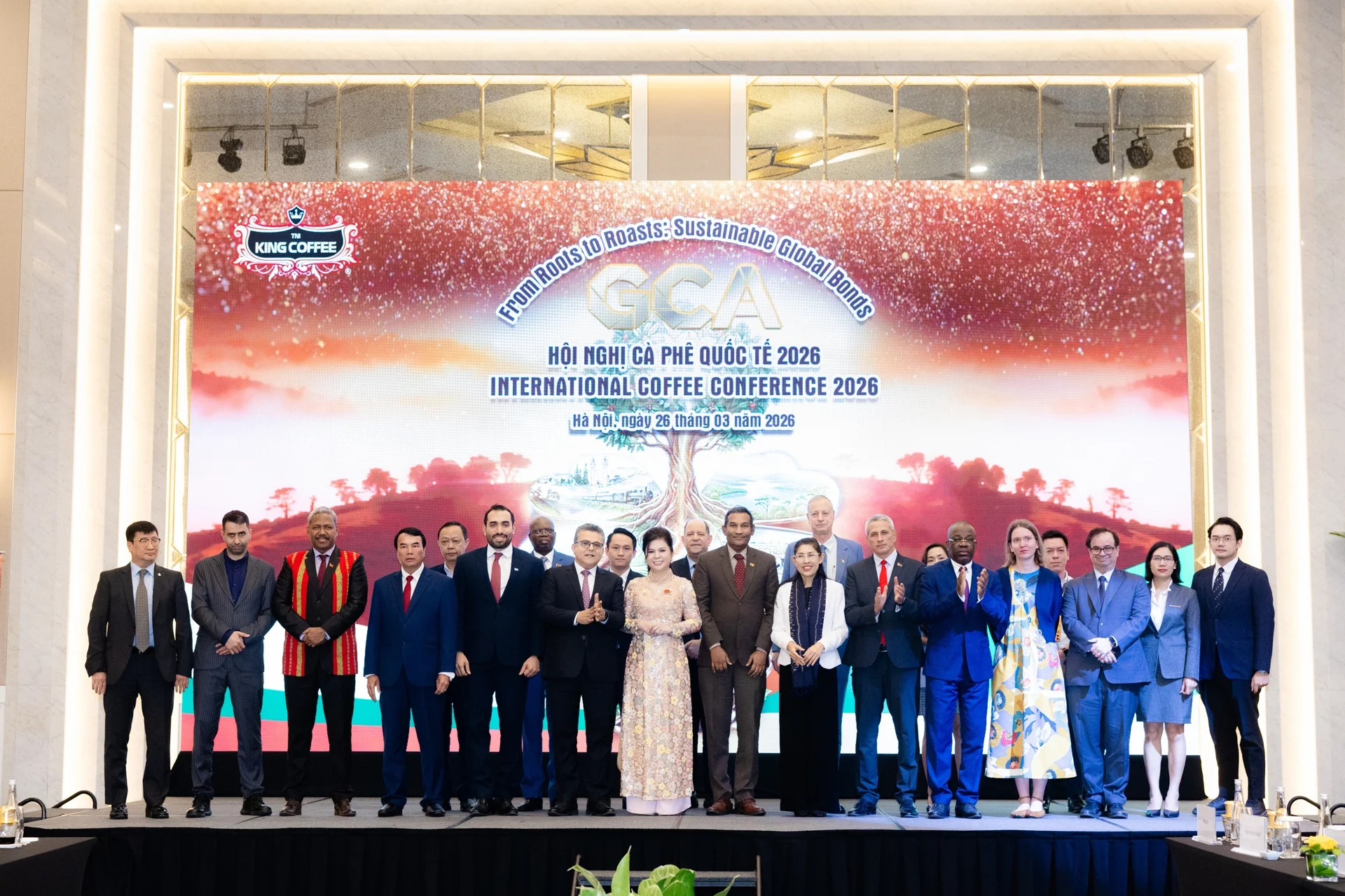
The International Coffee Conference 2026 marked the launch of the Global Coffee Alliance initiative.
Speaking at the event, Palestinian Ambassador Saadi Salama emphasized that coffee transcends its role as a mere commodity. He described it as a universal language through which cultures connect, dialogue is fostered and trust is built. His remarks underscore a broader shift in how the coffee sector is perceived, with cultural and diplomatic value increasingly recognized alongside economic significance. In a fragmented world shaped by competition and conflict, such soft connections can play a meaningful role in promoting cooperation and stability.
From an economic perspective, experts at the conference highlighted significant shifts in the global coffee market. Price volatility, stricter environmental standards, evolving consumer behavior and intensified competition among producing countries are creating unprecedented pressures. In this context, an alliance capable of coordinating policies, sharing information and promoting common standards is viewed as essential to mitigating risks and optimizing value across the entire supply chain.
In her opening remarks, Le Hoang Diep Thao framed the issue at a deeper level, noting that no single country or enterprise can navigate the structural disruptions facing the coffee industry alone. She positioned the Global Coffee Alliance as a public–private partnership platform that connects diplomatic influence with the execution capacity of businesses. This approach reflects an emerging model of global governance, where complex challenges require collaboration across multiple stakeholders rather than reliance on a single center of power.
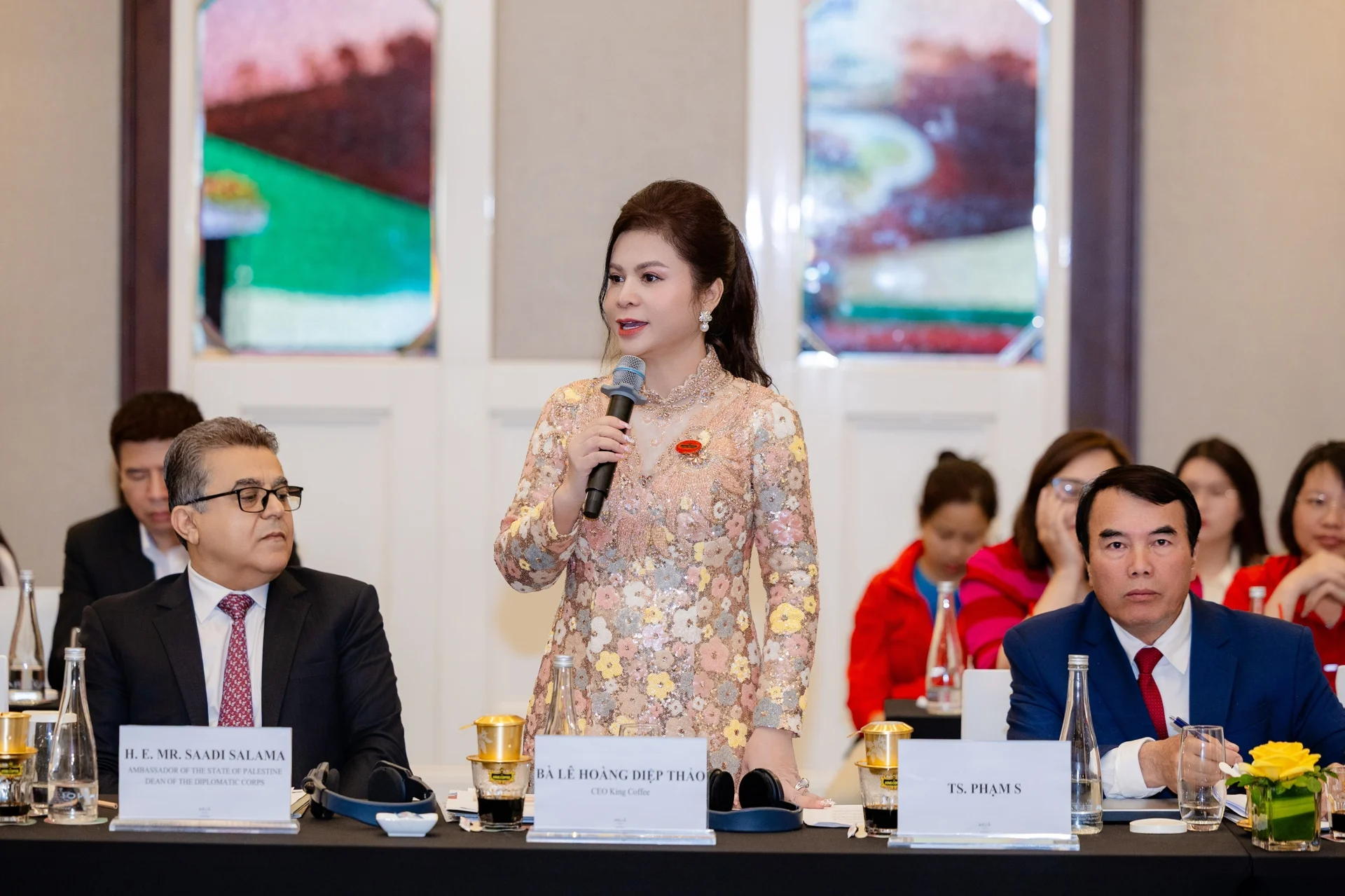
Ms. Le Hoang Diep Thao, Founder and CEO of TNI King Coffee.
The GCA 2026 Declaration is built around five core pillars that collectively address the full spectrum of sustainable development. These include protecting ecosystems and advancing regenerative agriculture, ensuring fair livelihoods for farmers, strengthening the role of diplomacy in shaping policy and market access, promoting innovation through technology and knowledge sharing, and recognizing coffee as a shared cultural heritage that connects societies across borders.
Building on this foundation, the GCA Vision 2040 sets out an ambitious goal of creating a global coffee ecosystem that is people-centered, environmentally responsible and technology-driven, with net-zero emissions as a long-term target. This vision is structured through a phased roadmap, beginning with digitalization and platform development, followed by value transformation and quality enhancement, and ultimately leading to a fully realized circular economy model for the industry.
A key component of this strategy is the integration of technology across the coffee value chain. The application of artificial intelligence for market forecasting, weather prediction and farm optimization is expected to enhance productivity while reducing risks for farmers. Meanwhile, blockchain technology is proposed as a tool to ensure transparency and traceability, meeting increasingly stringent international standards. The AI Coffee Academy initiative is also positioned as a critical step in workforce development and technology transfer, helping to equip a new generation with the skills required for a digital economy.
Beyond technology, the alliance sets out clear economic and social objectives. These include improving farmers’ incomes, expanding sustainable cultivation areas and promoting deeper processing to increase value creation. This is particularly significant for Vietnam, currently the world’s second-largest coffee exporter and the leading producer of Robusta. For years, Vietnam has primarily operated at the raw material stage of the value chain, making the shift toward processing and brand development a crucial step in enhancing its global position.
The conference also featured insights from ambassadors and country representatives, highlighting the diversity of coffee production worldwide. From high-altitude Arabica grown in Timor-Leste to distinctive varieties from Haiti and the rich diversity of Brazil and Colombia, these exchanges offered both academic perspectives and practical opportunities for collaboration, including breeding, technical sharing and product innovation.
The launch of the Global Coffee Alliance in Hanoi therefore represents more than an economic initiative. It signals a strategic move in Vietnam’s foreign engagement, positioning the country not only as a major producer but also as a connector within the global coffee ecosystem. By taking a proactive role in proposing and leading such initiatives, Vietnam is increasingly able to shape industry standards and future development trends.
In this context, the International Coffee Conference 2026 can be seen as the starting point of a long-term journey, where coffee evolves beyond a commodity into a bridge linking nations, traditions and innovation. The Global Coffee Alliance is expected to serve as the foundation for building a more equitable, transparent and sustainable ecosystem, ensuring that value is shared more fairly across the global coffee community.
DDK